Wednesday, February 29, 2012

Shanghai Girls

So much for New Year's Resolutions.

I'm afraid my 1book/10days goal has fallen to the wayside to make room for shopping trips to Seattle, Holidays to Ontario, and far too much TV watching (have fallen in love with the new series SMASH and Revenge, and am, as always, obsessed with Fringe, The Office, Grey's Anatomy, and countless others).

I did manage, however, to fit a 3rd book into January before falling off the resolution train (I made that metaphor up.  It isn't a thing.)

Shanghai Girls by Lisa See, I'm afraid, was a waste of my time. I haven't read any of this author's previous works (Snow Flower and the Secret Fan, Peony in Love, etc.) but judging by their title's alone, I imagine See fell into Jodi's trap a bit, and figured that if Asian Chick Lit worked once, it would work again.  And again.  And, apparently, again and again.  The website link above gives a similar synopsis to the one I read on the back cover of this "borrowed from an aunt" book, and gave me sufficient cause to believe I'd enjoy it.


I think where See failed was in keeping my interest.  Her novel is essentially a memoir, and documents the lives of two sisters from early adulthood to old ladyhood.  Their journey begins in Shanghai, lasts through the Japanese invasion against the city, sees them illegally immigrate to America, start families there, and in the end, head back to China.  They face a few tragedies along the way, and another thing that somewhat turned me against See was what I viewed as a trivialization of rape, and then of suicide.  Maybe its a culture thing that I was unable to pick up on, but I found that these events felt forced, almost as if they were stuck willy-nilly in to the story to add excitement (not sure it worked).

I simply found myself bored with See's novel, and really had to force myself to finish it.  I contemplated not even dignifying the read with a blog, but then I figured I could at least give my small readership a warning to not bother.

I have higher expectations for my next couple reads- ones I picked up onsale at the Indigo in Oshawa whilst shopping with my Aunt, little cousin, and best friend.  "Good Bones and Simple Murders", a short story collection by my main madam Margaret Atwood, and The Meaning of Matthew, written by Judy Shepherd following her son's murder in Laramie (sidenote, "The Laramie Project" is one of the most moving plays I've ever read", both promise to be better than my last pick.

Wednesday, January 18, 2012

We Need to Talk About Kevin

"Uneasy with the sacrifices and social demotion of motherhood from the start, Eva fears that her alarming dislike for her own son may be responsible for driving him so nihilistically off the rails..."


Ok bloggies, we need to talk about We Need to Talk About Kevin by Lionel Shriver.  This Orange Prize winning book is getting major hype these days, as the motion picture of the same name, starring Tilda Swinton and John C. Reilly, comes out this month.  (Side note, this nye, before going out for a wild evening in Van, I went out to starbucks in White Rock without mascara on.  Pulled a Swinton. Probably the most daring aesthetic move I've made in all my life.)


Shriver's book is narrated via a series letters (ooo epistolary novel! How very Victorian of you! How very much my jam!) from Eva Khatchadourian to her husband Franklin.  In these letters, Eva goes over, start to finish, her ambiguous relationship with motherhood, and whether or not she had something to do with her son Kevin's decision, at age 15, to murder seven classmates, a teacher and cafeteria worker at his highschool.

From page one, Shriver's novel is absolutely captivating.  You get completely sucked in to Eva's life, and her twisted relationship with her equally twisted son.  Shriver's writing style was an absolute delight, and I was especially impressed with her use of vocabulary.  I finally got around to downloading the dictionary.com app for my iPhone, if only because I needed to look up words constantly while working through this book.  In what you could loosely term metafiction, Shriver's Eva and Kevin are equally adept in vocab, a little detail I greatly appreciated.

In her own blurb about the book, Shriver writes:

"The novel does implicitly ask: "Has Kevin been mangled by his mother's coldness, or is he innately horried?" Yet I hope that this question is no more resolved in the book thn crude oppositings like "nature vs nurte" are ever reconciled in real life...Is Kevin inherintely evil, or is Eva- who admits about motherhood, "I was terrible at it" - ultimately to blame for how he turned out? I don't know. You tell me."

Indeeeeed, these are the complexities that Shriver executes just...just amazingly really.  I'm lucky that I never came across this book in school, because I don't think I'd be able to write a paper on it without breaking the weighty "don't praise the author" rule- without breaking it many times.

Kevin is a sadistic asshole.  You hate him, you hate him so much, and you can't blame Eva for hating him too.  But then you're like- wait a second, she's his MOTHER, she's supposed to love him unconditionally no matter what, what is WRONG with her?  The back and forth is what makes this book so gripping, and so obsession worthy.  Although he is not as developed throughout, Eva's husband and Kevin's father, Franklin, is also a fascinating character, if technically a "flat" one.  He fills out the typical parental role, loving unconditionally even when the reader is highly convinced that he shouldn't.  The fact that at the heart of her letters and the whole reason for her going over her motherhood is Eva's deep love for Franklin is something that gets lost in the excitement and hideousness of the plot.  It is, however, perhaps one of the reasons the reader may lean towards identifying with Eva, with this clearly human emotion of hers.  

In true review fashion, I can't give away the ending, but man, does it ever take you to a deep place.  This book is not for the faint-of-heart.  It is possibly the best example I've ever read of "heavy"reading, if you take the term in an emotional sense.  It is a times downright depressing, and yet it is so impeccably written that if you think you can muster some darkness, you should give it a try.  If only to learn what dolorous, fricative, logomachy, and maleficence mean.

Wednesday, January 4, 2012

The Marriage Plot

One of my new year's resolutions is to "enrich my life through literature and music".  To complete the lit portion of this pledge I hope to read a book every ten days.  So far, I'm on track, having recently finished Jeffrey Eugenides' latest work, The Marriage Plot.

I got this novel from both my mother, and one of my aunts, tipping you off, dear readers, to how much it seems suited to me.

For starters, I've been a fan of Eugenides before.  While most people may recognize his name in association with The Virgin Suicides, I was much more impressed with Eugenides' second work, MiddleSex, in which he explores the issue of gender identity, surrounded, of course, by the many branching issues that come with it.  The book won a pulitzer prize, and for good reason.  Its a challenging read, but one that makes you feel super intelligent while perusing its pages.

Moving on to E's latest work!  If I may, the hook on the front flap of the cover is the reason I knew I had to read this book, and likely the reason my mum and her sister chose it for me as well:

"Its the early 1980s - the country is in a deep recession, and life after college is harder than ever.  In the cafes on College Hill, the wised-up kids are inhaling Derrida and listening to Talking Heads.  But Madeleine Hanna, dutiful English major, is writing her senior thesis on Jane Austen and George Eliot, purveyors of the marriage plot that lies at the heart of the greatest English novels."


The protagonist of this novel is me!

After having read more than just the front flap of The Marriage Plot, however, I have to admit that this description is a little bit misleading.  While Madeleine starts off super into Victorian Lit, and comes back around to it in the end, she spends a fair chunk of the text getting into the philosophical stuff her fellow students are getting into.  This is ok though, as Madeleine's academic leanings aren't the point of Eugenides' work anyways.

Amazingly, this novel is a tongue-in-cheek 21st century version of its title, of the "marriage plot" from Pride and Prejudice, Sense and Sensibility, Middlemarch and so many others.  At the same time, its an exploration on feminism (which I always love), gender stereotypes, religion, sexuality, mental health and RELATIONSHIPS. (and the list goes on).

Along with Madeleine, we follow the college and post-college lives of her boyfriend and eventual husband Leonard- a brilliant-minded science student who suffers from manic depression, and religious studies student Mitchell, who falls in love with Madeleine from day one and spends his year after graduation backpacking across Europe and then India with his roommate from college.  Its a love triangle of sort, but a complex one, complicated by several of the issues I mentioned above.

I have to say that Mitchell's storyline is a little bit cliche, in that he does some lily-pad hopping to and from religions, but is never able to overcome his own ego to give over to the whole "more than me" concept that seems to centre many of them.  He is at times a bit of a dog in his treatment of women, but in the end makes an incredibly gentleman-like decision that made the whole book worth reading.

Madeleine isn't the most likeable character, but I liked her.  Throughout the novel, she makes both admirable and stupid decisions, so if she's not typically "likeable", she's at least believable.  I saw many aspects of myself in her character as well, which always does the trick for getting a reader into her reading material.

Leonard, for me, is one of the more interesting characters- which is saying something, because he's a boring lump for most of the text.  The reality of the situation is that Leonard is in a depressive state for a huge chunk of the novel, and only twice (compared to many more times for Madeleine and Mitchell) do we get a window into his side of things.  I think Eugenides does an admirable job of portraying a character dealing with a mental illness, which is not something that is easy to do.  I've got some huge empathetic feelings towards Leonard, and I really respected the way that E represented Leonard's journey with his disease, and how it effects the people around him.

So while the novel may not necessarily be worth reading if looking at characters alone, the "hot topics" that Eugenides explores through these characters are. We get so many angles: stereotypes and stigmas are enforced, then subverted- they are turned on their heads, made fun of, and ultimately left up in the air. I love it.

The Marriage Plot is not your typical Victorian novel; its not your typical love story.  It is, however, a captivating and thought-provoking read that can definitely find a place in your heart- if you let it.

Saturday, October 29, 2011

The Penelopiad

Faithful followers,

You may recall that in one of my first blog posts, I mentioned Margaret Atwood's The Penelopiad as being one of my favourite novels.

Last week, Atwood's own stage adaptation of her novella came to The Stanley and the Arts Club Theatre put on an incredible show.  I went to the play with my friend Kat, who hadn't read the text before, and she was equally blown away.

I often assume that everyone knows the gist of Homer's "Odyssey", but I'm beginning to realize this isn't true.  Thanks to Brad Pitt, I think most people at least know the story behind "The Illiad", so I'll use that as my starting point.

After winning the Battle of Troy with his crafty Trojan horse plan, Wily Odysseus sets sail home to Ithaca, after 10 years of absence from his wife Penelope and son Telemachus. Instead of going straight home though, Odysseus spends another 10 years adventuring all over Ancient Greece, outsmarting a cyclops (pissing off Papa Poseidon to no end), withstanding the songs of sirens, and shacking up with the Goddess Circe on her island, to name a few.  Meanwhile, Penelope is back at home in Ithaca with a "hardened heart", warding off hundreds of suitors eating her out of house and home and trying to convince her that her husband is dead.  Penelope is the definition of loyalty, never losing faith in her husband's returning, and earning her own epitaph, "clever", with tricks like her never-ending shroud.  In the end, Odysseus finally returns home and kills everyone, including 12 maids of Penelope's who been particularly skanky with the suitors.  P and O go to sleep in their special treetrunk bed, dawn with her red rose fingers dances across the sky and so end "The Odyssey".

In Atwood's The Penelopiad, however, the story takes a decidedly different take on the events of Homer's tale, with a deceased Penelope telling HER side of things down from Hades.  The essential difference in Atwood's text is that the 12 maids are in fact Penelope's most trusted confidantes, hanging with the suitors on her command, helping her weave and unweave the shroud, and being basically like daughters to Ithaca's Queen.  Penelope is therefore heartbroken when unbeknownst to her, her beloved maids are hanged by her own son before she can explain to her husband what a help they were to her.  The maids take a main role in Atwood's text, narrating hilarious scenes like "The Trial of Odysseus"  and giving a lecture on phallic imagery in Odysseus' return to Ithaca.  They are incredibly haunting characters as well, following Penelope around in Hades, "floating" rather than walking, their feet still "twitching"- the term immortalized in Homer's original.

Those of you who know me best know I LOOOVE to get my Feminism on, and this novella suits me so fine.

I was so excited to find out that "The Penelopiad" was coming to Vancouver, and that it was Atwood herself who had adapted her original work for the stage.  The play features an 11 person, all female cast, Vancouver's staging starring Meg Roe as Penelope.  The remaining 10 women all play maids, but additionally play other characters, including male ones such as Penelope's father, her son Telemachus, and of course, Wily O.  The actresses featured in the Arts Club's production were so incredibly talented, and I was especially impressed with their ability to portray masculine characters.

Another aspect of the play that I adored was the musical excerpts included throughout.  Penelope and her maids sing a haunting lullaby to Telemachus, an effective round while they weave and unweave at the dead of night, and as raucous sailers sing a ballad on O's exploits.  There was a violinist in the cast, another woman played guitar, there was often additional percussion instruments involved in the songs, and oh my goodness could these ladies sing!!! Sometimes the pieces were in 4 part harmony, and they were gorgeous!  I am so incredibly picky when it comes to vocal music, so you can be assured that if I'm saying these gals were good, I really, really mean it.

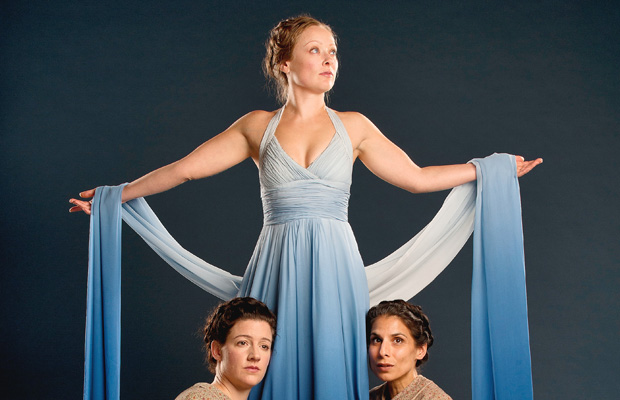
Check out some of the pics, and a video "trailer" from the Arts Club production.  It runs until Nov 20th, and if you have a chance I whole-heartedly recommend seeing it.  If thats not a possibility for you, at least read Atwood's book!


Friday, October 21, 2011

A Novel in Five Hours

I have just completed my first adventure into the world of Douglas Coupland.  I've spent the last couple days mostly curled up on the couch, going through boxes of kleenex, watching Say Yes to the Dress marathons, and reading Coupland's Player One: What Is to Become of Us. Proclaimed at the bottom of the front cover as "A Novel in Five Hours".  It is indeed structured as such, hours 1-5, and narrated by 4 characters stranded in a seedy airport hotel bar during a global disaster.

Kathy, a divorced mom looking for a second shot at love, Rick, a divorced alcoholic tending bar at the lounge, Luke, an ex-priest turned criminal, and Rachel, a physically gorgeous, emotionally and mentally complicated 20 something looking to have a baby, all end up stuck in Rick's bar when oil hits a whopping $900 per barrel and the world as they know it goes absolutely to shit.

Along with these 4 characters, the novel is also narrated by "Player One" a disembodied voice that exists in the computer world, and knows everything.

Coupland's novel is eerie, and post-modern, but not preachy or annoying. I daresay I enjoyed it very, very much, but I can recognize that I might be a minority audience in this feeling.


Through his 5 narrative voices, Coupland launches an inquisition in to too many hot topics to count: Religion, Technology, Relationships, Time, Society, Identity....the list goes on.  And while it doesn't offer many answers to any of the proposed questions, Coupland's novel certainly gets you thinking.  

Get this though- it has a happy ending!  Yes, "the New Normal" is depicted in a not altogether positive light, but the characters that I got surprisingly attached to all came out of their shared-disaster-experience THANG alright.  Then after the story there's a hilarious "Future Legend" of terms, that also includes clever little references to the plot and characters preceding it.  For example:

Time Snack:

Often annoying moments of pseudo-leisure created by computer when they stop responding in order to save a file, to search for software updates, or, most likely, for no apparent reason.

Torn-Paper Geography

The phenomenon in which, if you take a sheet of paper and rip it in half, both pieces will probably resemble and American state or Canadian province...

Pope Gregory's Day-timer

Doesn't mean anything in particular, but it certainly would have been interesting to see.


I'm having trouble discussing this Player One without giving too much away...think Woolf meets Hemingway meets that t.v. show Jericho meets Canada meets the Dystopian lit genre, and if you're still interested, let me know and I'll lend it to you!


plus


plus


plus


plus

equals


Thursday, October 6, 2011

The Solitude of Prime Numbers

The women on my mum's side of the family have a great book and magazine sharing system, and my grandma (aka, the gma or the matriarch) is the hub.  Whenever we visit, there's a massive stack of magazines on the coffee table, and much more to my delight, a magical table in her upstairs bedroom covered in all sorts of literary goodies.

My mum and her 3 sisters all have pretty exceptional taste in books, and that upstairs-table at my grandma's is a never-ending source of reading material.  Every time I go over for a visit at my Gma's I come home with new reads.

This weekend, I brought home Paolo Giordano's The Solitude of Prime Numbers.


It was a really quick and easy read- I finished in about a day and half.  It was certainly a change of pace from the Austen novel that preceded it, and because of this I think I enjoyed it all the more.
Giordano's novel is a story of two "prime number" type characters, Alice and Mattia of Italy.  

The title of the text provides a context for the lives of these two characters, who are prime numbers in that they never quite fit in with society as a whole.  Mattia, who grows up to be a successful mathematician, at one point wonders if the two can ever be "prime pairs", prime numbers with only one other number between them, like 5 and 7 or 11 and 13.  These numbers are alone together, less lonely than the higher prime numbers, where pairs get less and less frequent. 


The novel begins with sections on both 6 year old Alice and 6 year old Mattia, when the main characters both experience a childhood trauma that impacts the entirety of their lives.

Mattia suffers from the loss of his identical twin sister, and Alice has a ski accident, experiences that leave the protagonists emotionally and physically crippled, respectively.  Mattia's childhood commits him to a seriously anti-social lifestyle, while Alice's leads to an eating disorder and a dangerous need to feel accepted by her peers.  

Alice and Mattia meet in high-school, forming a somewhat inexplicable bond that neither of them can shake off, even when Alice gets married and Mattia leaves Italy for a research position out of the country. 
Giordano's text is a really well-written character-study that examines the sometimes underestimated impact of childhood experiences on one's life.  The plot is entirely believable (something I really appreciate in a novel), and is simple enough that Giordano's readers are able to focus on the characters themselves and how they deal with their lives, rather than the WHAT of what happens to them.  


If you're looking for entertaining, escapist literature, this book is not the way to go.  It is at times slightly depressing, and constantly inspires introspective thinking.  If this is a reading goal that intrigues you however, I highly recommend Giordano's book and the innovative writing it presents.


Also, Paolo is a hottie.
...and he's only 7 years older than me!
                              

Can you say "crushing"?

Tuesday, October 4, 2011

"Now a Major Motion Picture"

Dear followers and random stumblers-by,

I'm afraid I've been away from the blog world for a while! Now that I've had a month to get my new "you're-not-a-student-anymore" life all sorted our, I hope to be frequenting the blogspot crooks and crannies more often.

Tonight's post is not so much inspired as straight up developed by the lovely Miss Ashley, who suggested I write a post on novels turned movies.

Interestingly enough,  3 of my english courses at UBC, 2 of them from my last semester, dealt with that hot-topic.  I wrote a paper on Disney's adaptation of Perrault's Cinderella for my Children's Lit course, and in both my Victorian and Dystopian lit classes, we often had the opportunity to watch film versions of the texts we were studying and respond to them.  Both classes came to the similar conclusion that good adaptations are a rare gem.


First person narratives turned films specifically rarely-if ever- work out.  When you have a story written in the "I did this, I did that" style, screenwriters often jump to the horrendous overdubbed narration option.  It works in Grey's Anatomy.  I hate it almost everywhere else.

This issue is even more of a complication for screenwriters when a novel has multiple narrators.  One of the examples from my Victorian Lit class is Wilkie Collins' The Moonstone.  As a class, we all though the BBC film version of this "first detective novel" did it a huge disservice in having to erase the several narrative voices included in the text.

A more recent and topical example is Kathryn Stockett's The Help.  My mom and I agreed to read novel before seeing the movie, and I'm quite glad that I remained true to this pact.  The Help has 3 narrators, Aibileen, Minny and Skeeter, but the movie only uses Aibileen's voiceover as a narration.  My only real complaint of the movie is that this decision causes the audience to lose a lot of the Stockett's characterization of Skeeter and Minny that is so well deveoped in the novel.  The biggest contrast I noticed, and one that nagged at me throughout the late night showing of the film that I saw with my cousins, was a discrepancy in Minny's character.  You know that Avenue Q song, "Everyone's a Little Bit Racist"? Well, in Stockett's novel, the uppity white women of Jacksonville, Mississippi aren't the only ones with racist tendencies.  Its done in a very subtle and well-executed way, but still apparent in the text version of this story, Minny is presented as being similarly prejudiced towards the white people who have prejudices against her.  That complex layer to the novel made a much stronger statement than the movie's "white people are mean" one. (Sorry).

That said- the movie is still very good! I almost think I would have enjoyed it more however, if I hadn't read the book first.  And lets be clear, the book was still better.  As tends to be the rule.


To go general again, as much as first person narratives are difficult to transfer over into film, limited omniscient p.o.v's (where the reader is privy to one character's thoughts, but one one) can be equally challenging.  How do you show a character's thoughts in a movie without doing the silly voiceover thing? With difficulty.  Some movies though, have managed to do it.  Harry Potter.  Case in point.

I just finished reading, for the first time.  Jane Austen's Pride and Prejudice. What a fabulous read! If any of you haven't read it yet- do it.  It is SOOOOO much better than the movie! It goes into so much detail, and wow, it was just great.  The 2005 Keira Knightly version of the novel is a nice "filler", in that it does a lovely job of showing off the English countryside and fancy dress, and it makes me love Mr. Darcy a bit more than just words on a page can do.


 (or actually watch him walk across the field.)


In the end though, I have to conclude that the best movies are made from objectively-written novels.


Lord of the Rings baby.  LOTR.